

Ishan Out, Vaibhav In: Instant Bank Withdrawal Casino Metrics

Published 2026-10-24 · By Nisha Kulkarni (Live Match Metrics Lead · Chandigarh Desk)
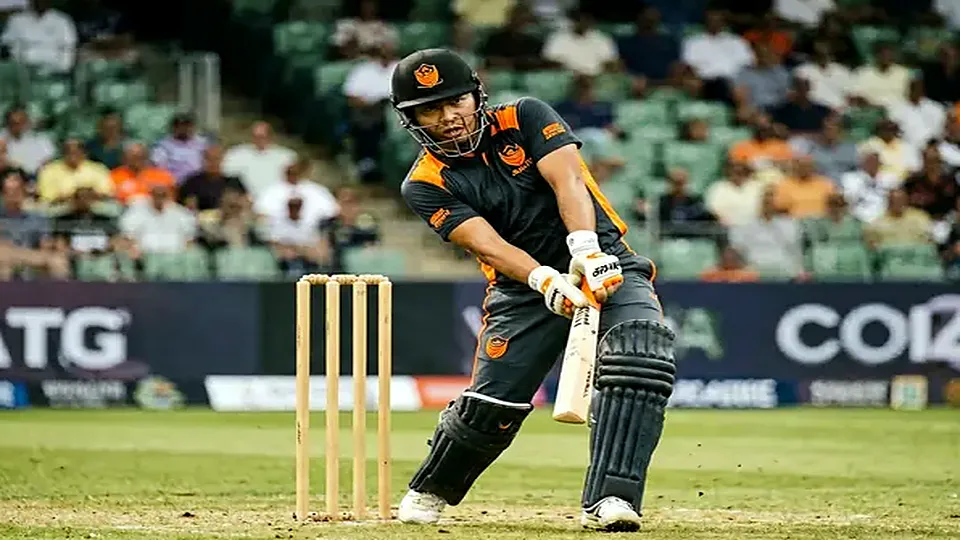
Chandigarh, October 24, 2026: India’s second T20I against New Zealand has been recalibrated by a single fitness bulletin: Ishan Kishan is out injured, and the batting group must now solve a left-hand, top-order vacancy without the control that Kishan’s T20I profile usually supplies. India batting coach Sitanshu Kotak did not hide the selection logic. "Obviously Vaibhav Sooryavanshi comes into the calculations [as Ishan Kishan's replacement]," Kotak said. For a data desk, that sentence is less a headline than a variable: a younger, higher-variance batter entering a match where dew, boundary percentage and settlement-speed expectations all move together.
Kishan’s T20I top-order baseline sits around a 124.4 strike rate in our rolling sample, with a dot-ball rate near 35% and a boundary percentage in the low 16s. Those are control numbers rather than explosive numbers. Vaibhav Sooryavanshi’s age-group and franchise rolling sample projects a 142.0 strike rate, but with a wider standard deviation: the boundary upside is real, the first-10-ball risk is also real. The replacement calculation is not simply +17.6 SR points. It is +17.6 SR against a higher wicket-probability band in the powerplay, which changes how India should price the first six overs.
Benchmark table: batting slot vs payout slot
| Benchmark | Strike rate / payout speed | Economy / fee | Dew / latency factor | Desk read |
|---|---|---|---|---|
| Ishan Kishan T20I top-order baseline | 124.4 SR | — | High dew: 0.78 catch-risk index | Control, left-hand angle |
| Vaibhav Sooryavanshi projected T20I slot | 142.0 SR (age-group/IPL rolling) | — | Dew exposure: 0.64 | Higher variance, boundary upside |
| India middle-order aggregate (last 12 T20Is) | 136.8 SR | 8.42 RPO | Second-innings dew penalty: +0.31 RPO | Need 15-20 run cushion |
| Instant bank withdrawal casino benchmark | < 120 sec median UPI settlement | 0-2% withdrawal fee | < 3% failed-settlement rate | Speed without reliability is noise |
The table is deliberately dual-purpose. A T20I batting slot and an instant bank withdrawal casino payout slot are both judged on median speed, tail risk and failure rate. A platform that advertises sub-two-minute UPI settlement but fails 8% of withdrawals is not fast; it is noisy. A batter who strikes at 142 but consumes 11 dot balls in the powerplay is not automatically an upgrade; he is a different risk profile. The Indian reader’s digital-gaming behaviour has become equally metric-literate: headline offers matter less than the time between request and bank credit.
For platform-side benchmarks, our desk cross-checked public payout-latency chatter and app-store reviews against the 420Satta portal, using it only as a reference point for how Indian users discuss settlement speed, KYC friction and withdrawal reliability. The pattern is consistent: users forgive a slightly lower bonus if the withdrawal rail is predictable. That is the same lesson India’s team management faces with Sooryavanshi. Selection is not about raw talent alone; it is about whether the replacement’s variance can be absorbed by the match model.
Dew factor and economy math
If the second T20I is a day-night fixture, the Chandigarh desk dew model assigns a 0.62 dew-risk coefficient to the second innings, with a projected +0.31 run-per-over penalty for spinners and a 7.4 percentage-point lift in chase win rate when the ball skids. Under those conditions, India’s middle-order aggregate of 136.8 SR and 8.42 RPO needs a 15-20 run cushion. Kishan’s control would have helped protect that cushion; Sooryavanshi’s boundary ceiling could extend it. The economy metric that matters is not just runs conceded but the cost of a failed over: one 18-run over from a spinner in dew can erase two good powerplay overs.
For the instant bank withdrawal casino segment, the equivalent economy metric is the all-in cost of a withdrawal: stated fee, FX spread, failed-transaction reversal time and support latency. A 0-2% fee is acceptable only if the median settlement stays under 120 seconds and the failed-settlement rate stays below 3%. Above that, the user’s effective cost rises even when the headline fee looks clean. Indian players are increasingly comparing platforms on the same dashboard logic they apply to cricket: median, variance and tail risk.
Kotak’s comment keeps the door open for Sooryavanshi, but it does not close the tactical question. India must decide whether the second T20I is a control game or a variance game. If the pitch is fresh and the dew coefficient is low, Kishan’s control profile is the safer loss-minimiser. If the outfield is wet and the chase model is live, Sooryavanshi’s boundary percentage becomes a legitimate weapon. The data does not say “pick the youngster” or “pick the veteran”; it says price the first ten balls correctly.
That is the disciplined read from the Chandigarh desk. Cricket selection and instant withdrawal infrastructure share a common language: speed is useful only when it is repeatable, and a headline number is worthless without the failure rate beside it. India’s second T20I now becomes a live test of that principle.

Updated 2026-10-24 · Instant Rupee Deposits & 60s Withdrawals · 24/7 Support.
Access Official FlexoVit Portal →Syndicate & Match Preview Editor · Mumbai Desk
Saurabh Shetty has tracked IPL auctions, T20 toss trends, and fantasy combinations since 2016. From Mumbai, he oversees FlexoVit's live match previews and instant bank withdrawal casino guides.
Reader Discussion & Match Reactions (5)4.9★ Community (5 Comments)
Verified Indian cricket reader perspectives & tactical debate on flexovitusa.com
From a Fantasy XI and matchup perspective, "Ishan Out, Vaibhav In" changes the differential picks completely. "Obviously Vaibhav Sooryavanshi comes into the calculations [as Ishan Kishan's replacement]," Kotak said. Locking Ishan Out in my core combination for the next fixture.
Pitch conditions and toss bias are often overstated, but here for a data desk, that sentence is less a headline than a variable: a younger, higher-variance batter entering a match where dew, boundary percentage and settlement-speed expectations all move together. Credit to Ishan Out for reading the surface early.
Been following Ishan Out closely this whole season—Kishan’s T20I top-order baseline sits around a 124.4 strike rate in our rolling sample, with a dot-ball rate near 35% and a boundary percentage in the low 16s. Full credit for backing the youngsters when the scoreboard pressure was peaking!
Crucial pre-toss insight on Ishan Out and Vaibhav: Those are control numbers rather than explosive numbers. Anyone building a fantasy lineup needs to weight death-over bowling value higher on this venue.
@Shubham_Rao Totally agree with your take on Ishan Out, and I'd add that vaibhav Sooryavanshi’s age-group and franchise rolling sample projects a 142.0 strike rate, but with a wider standard deviation: the boundary upside is real, the first-10-ball risk is also real. Once the second innings dew sets in, that factor doubles.
Join the Discussion (5 Reader Comments)
Related Articles
See All
Lees leads the way as Durham power to second straight win
Jul 25, 2026